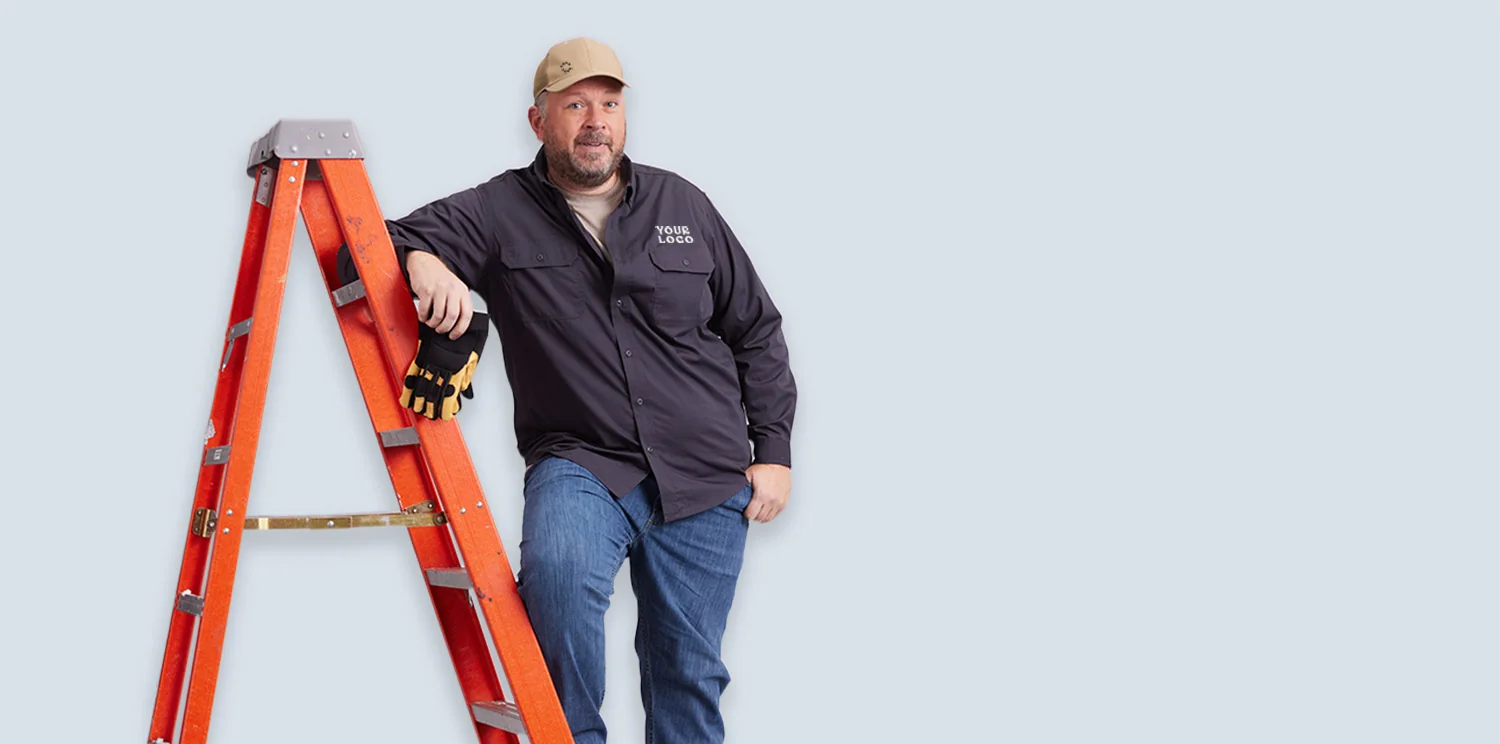
Custom Work Shirts: Building Brand Identity Through Professional Employee Apparel
Custom work shirts are branded employee garments featuring company logos, names, or designs that create unified professional appearance across teams, departments, or entire organizations. Businesses implementing work shirts with logo programs report 53% stronger team cohesion and 67% increased customer trust according to 2024 workplace branding research. These strategic apparel investments generate 4,200-6,800 annual brand impressions per employee through client interactions, community visibility, and workplace environments.
Forward-thinking organizations recognize that employee apparel functions as foundational brand infrastructure rather than optional uniform requirements in 2025. Personalized work shirts transform staff members into walking brand ambassadors who amplify organizational presence during customer interactions, service calls, trade shows, and community events. This comprehensive guide explores fabric technologies, design strategies, industry applications, and implementation approaches that maximize marketing effectiveness for work shirt programs across diverse business sectors where professional presentation influences customer perceptions and purchasing decisions.
Why Do Custom Work Shirts Strengthen Brand Recognition More Than Traditional Advertising?
Custom work shirts deliver continuous brand exposure through daily employee wear spanning 8-10 hour shifts, creating sustained visibility that traditional advertising cannot replicate through brief impressions. Employees wearing work shirts with logo create 250-350 monthly customer impressions through face-to-face interactions where trust and credibility matter most for conversion outcomes. Research demonstrates branded employee apparel generates 4.3 times higher brand recall than digital advertisements, with 81% of customers remembering companies whose employees wear professional branded uniforms according to 2025 consumer perception studies tracking advertising effectiveness across channels.
The psychological impact of unified professional appearance extends beyond simple logo visibility to fundamental customer confidence and service quality perceptions that influence buying behaviors. Customers encountering employees in custom work t-shirts report 47% higher trust levels compared to interactions with non-uniformed staff, which directly influences purchasing decisions, average transaction values, and repeat business rates. This credibility boost proves particularly valuable in service industries including HVAC, plumbing, electrical, landscaping, and food service where professional presentation differentiates quality providers from casual operators competing on price rather than value.
Community visibility multiplies marketing reach when employees wear personalized work shirts during lunch breaks, commutes, and after-work activities throughout neighborhoods where businesses operate and target customers live. A single employee generates 40-60 daily community impressions as they move through coffee shops, gas stations, grocery stores, and residential areas while wearing branded apparel that creates recognition and familiarity. Small businesses with 8-15 employees create 3,200-9,000 weekly community brand exposures through strategic work shirt programs that function as mobile billboards requiring no ongoing media costs.
The compounding effect of daily exposure creates brand familiarity that traditional advertising struggles to achieve without substantial ongoing investment. Marketing research indicates consumers require 7-12 brand exposures before recognition solidifies, making daily employee apparel visibility particularly effective for local businesses serving geographic communities. Work shirt programs deliver these repeated exposures naturally through normal business operations rather than purchased advertising placements.
Long-term impression value surpasses campaign-based marketing tactics that disappear when budgets end or contracts expire. Quality custom work shirts maintain brand presentation through 150-200 washes spanning 18-36 months of regular use, delivering sustained marketing returns without renewal requirements. This durability produces superior cost-per-impression metrics compared to temporary advertising placements, event sponsorships, or digital campaigns requiring continuous investment to maintain visibility.
Employee pride and retention benefits create additional organizational value beyond external marketing impacts. Team members wearing professional branded apparel report 34% higher job satisfaction and 28% stronger organizational commitment according to workplace culture research. This psychological ownership strengthens employee retention while reducing recruitment and training costs that plague industries with high turnover rates.
What Types of Custom Work Shirts Serve Different Industry Needs?
Custom polo shirts with embroidered logos represent the most versatile option for customer-facing roles requiring professional appearance balanced with comfortable functionality throughout active workdays. These garments prove ideal for retail staff, sales teams, office personnel, and service technicians who interact with clients while performing physical tasks. Polo construction typically features cotton-polyester blends offering breathability during active workdays while maintaining structured collar presentation that communicates professionalism and attention to detail.
The collar structure distinguishes polos from casual t-shirts, creating business-appropriate appearance suitable for diverse customer environments from residential service calls to retail showrooms. Industries adopting polo uniforms report 38% higher perceived service quality ratings compared to casual t-shirt programs according to customer service research examining first impression impacts. This perception advantage translates to higher conversion rates, larger transaction values, and increased customer willingness to recommend services to others.
Custom work t-shirts excel in physically demanding environments including warehousing, manufacturing, construction, and landscaping where comfort and durability outweigh formal appearance requirements. Cotton or performance fabric t-shirts withstand rigorous movement, frequent washing, and challenging conditions while displaying bold screenprinted logos visible from significant distances. Businesses in trades and outdoor services favor t-shirt programs for their practical performance during 10-12 hour shifts involving physical labor, heavy lifting, and exposure to dirt, grease, or weather elements.
The casual presentation aligns with industry expectations in construction and manufacturing sectors where overly formal attire appears disconnected from work realities. Team members appreciate comfortable apparel that doesn't restrict movement or require careful maintenance beyond normal laundering. Screen printing enables large bold graphics measuring 10-14 inches that ensure visibility across job sites, warehouses, or outdoor work areas where team identification matters for safety and coordination.
Custom dress shirts serve industries requiring elevated professional standards including hospitality, financial services, healthcare administration, and corporate environments where dress codes emphasize business-appropriate attire. Long-sleeve and short-sleeve variations accommodate seasonal requirements while embroidered chest logos maintain subtle brand presence appropriate for professional settings where aggressive branding appears inappropriate. Organizations selecting button-down options typically pair them with specific color schemes and logo placement standards that reinforce corporate identity without overwhelming professional contexts.
These garments communicate seriousness and attention to detail that clients expect from professional service providers including accountants, financial advisors, real estate agents, and corporate consultants. The formal presentation justifies premium pricing while building client confidence in service quality and organizational competence. Many organizations specify button-downs for client-facing roles while allowing polos or t-shirts for back-office staff working without direct customer contact.
Performance fabric options incorporating moisture-wicking technology and UV protection serve outdoor professionals including event staff, golf course personnel, parks and recreation teams, and outdoor equipment retailers who work extended hours in sun exposure and physically demanding conditions. Technical fabrics maintain comfort during challenging conditions while preserving logo clarity through specialized printing or embroidery resistant to fading and deterioration from sun, sweat, and frequent washing.
Athletic organizations, summer camps, outdoor recreation companies, and event management firms adopt performance fabrics for staff working 8-12 hour shifts in heat and humidity. The functional advantages reduce heat-related health concerns while maintaining professional branded appearance throughout demanding conditions. Employees appreciate technical features that improve comfort, leading to higher program adoption and consistent wear compared to uncomfortable traditional work shirts that staff avoid wearing when possible.
How Do Material Choices Impact Work Shirt Longevity and Brand Presentation?
Cotton-polyester blends combining 50-65% cotton with 35-50% polyester deliver optimal balance between comfort and durability for most professional applications across diverse industries and climates. These blended materials maintain shape and color through 150-200 laundry cycles while resisting the shrinkage that plagues 100% cotton garments. The cotton component provides natural fiber breathability and soft hand feel that employees prefer, while polyester adds dimensional stability, wrinkle resistance, and enhanced durability.
Hospitality and retail sectors favor 60/40 cotton-poly blends for their professional drape and wrinkle resistance during extended shifts where employees cannot change between morning and evening service periods. The material maintains presentable appearance throughout 10-12 hour shifts without the rumpled look that pure cotton develops. Color retention remains strong through repeated industrial laundering required in high-volume hospitality operations processing hundreds of garments weekly. The blended construction also performs well across varying climate conditions, providing adequate warmth in air-conditioned environments while remaining comfortable in moderate outdoor temperatures.
Pure cotton construction offers superior breathability and comfort preferred by employees working in hot environments or engaged in physical labor generating significant perspiration throughout shifts. The natural fiber wicks moisture away from skin through capillary action while allowing airflow that promotes evaporative cooling. However, 100% cotton shirts experience 15-20% shrinkage over multiple washes and show noticeable color fading after 80-100 laundry cycles, which reduces branded appearance longevity and requires more frequent replacement.
Organizations selecting cotton prioritize immediate employee comfort over maximum garment durability, accepting more frequent replacement cycles as necessary trade-off. Industries with particularly hot working conditions including commercial kitchens, foundries, or outdoor summer operations may determine that employee heat stress reduction justifies higher replacement costs. The softer hand feel also appeals to employees accustomed to cotton casual wear, potentially increasing program adoption and consistent use.
Ring-spun cotton provides enhanced softness and durability compared to standard open-end cotton through manufacturing process creating stronger, finer yarns. Premium cotton shirts utilizing ring-spun construction withstand 100-120 washes before significant deterioration, extending lifespan by 25-30% compared to basic cotton alternatives. Organizations willing to invest in higher-quality cotton garments achieve better long-term value through extended replacement cycles.
Performance polyester fabrics excel in athletic, outdoor, and high-activity environments through moisture-wicking properties that actively pull sweat away from skin while maintaining lightweight feel during strenuous work. These technical materials resist fading and maintain logo clarity through 200-plus wash cycles, delivering extended brand presentation compared to natural fiber alternatives. The hydrophobic synthetic fibers transport moisture to garment exteriors where rapid evaporation occurs, keeping employees comfortable during physically demanding work.
Sports facilities, fitness centers, event management companies, and outdoor recreation businesses adopt performance fabrics for their functional advantages that improve employee comfort and safety during active roles. The quick-drying properties prove particularly valuable for employees working multiple shifts daily or in humid conditions where cotton garments remain damp causing discomfort and potential health issues. Material weights typically range from 3.5-5 ounces per square yard, providing substantial feel without heaviness.
Antimicrobial treatments applied to performance fabrics prevent odor development from bacterial growth in synthetic materials exposed to repeated sweating. These treatments extend garment freshness between launderings, reducing washing frequency and associated wear. Odor control proves especially important for employees unable to change garments mid-shift or working in customer-facing roles where personal presentation matters.
Material weight measured in ounces per square yard influences both durability and comfort profiles, with lightweight 4-5 ounce fabrics providing maximum breathability for hot conditions while heavyweight 6-7 ounce materials offer enhanced durability for rugged work environments. Lighter fabrics suit indoor climate-controlled environments or summer outdoor work, while heavier weights better serve cool-weather applications or rough conditions where fabric abrasion occurs frequently.
Organizations balance climate conditions, physical activity levels, and longevity requirements when specifying material weights. Geographic location influences optimal weight selection, with southern operations favoring lighter fabrics while northern businesses may specify heavier options. Some organizations maintain seasonal inventories switching between weights as temperatures change, though this approach increases inventory complexity and costs.
Which Logo Application Methods Deliver Optimal Results for Work Shirts?
Embroidery creates premium dimensional presentation ideal for polo shirts and button-down garments where sophisticated appearance matters for professional positioning. The raised stitching communicates quality and permanence that screen printing cannot achieve, making embroidery preferred for client-facing roles and corporate environments. Embroidered logos withstand 200-plus wash cycles without deterioration, providing exceptional durability that justifies higher per-garment application costs.
The texture and dimensionality of embroidery catch light and create visual interest that flat printing lacks, ensuring logos stand out during client interactions. Organizations emphasizing quality and professionalism favor embroidery for its elevated appearance and longevity. Chest logos measuring 3-4 inches work optimally for embroidery, as larger sizes become heavy and uncomfortable while smaller applications lose definition and impact. Thread color matching enables precise brand color reproduction through extensive thread libraries offering hundreds of color options. Metallic and specialty threads create distinctive effects impossible with printing methods, allowing creative design executions. Multi-color embroidery accommodates detailed logos with 6-8 colors, though simpler 2-3 color designs often prove more readable and impactful at typical viewing distances.
Screen printing delivers bold graphics ideal for t-shirts and casual work environments where large visible branding matters more than refined presentation. The printing process accommodates oversized logos measuring 10-14 inches that ensure visibility across job sites, warehouses, or outdoor work areas. Plastisol inks create opaque coverage on dark fabrics, enabling white or light-colored logos on black or navy shirts common in many work uniform programs.
Screen printing costs substantially less than embroidery for large designs, making it economical choice for organizations outfitting large teams or requiring frequent replacements due to harsh working conditions. Print durability varies with ink type and application technique, with quality screen printing surviving 50-75 washes before noticeable fading or cracking. Organizations accept shorter lifespan given lower per-garment costs enabling affordable replacement cycles.
Water-based inks create softer hand feel compared to plastisol alternatives, improving comfort for all-day wear while providing eco-friendly printing option. However, water-based prints show faster fading and reduced durability compared to plastisol, making them suitable for applications prioritizing comfort over maximum longevity. The softer feel proves popular for retail and hospitality programs where employee comfort influences program adoption.
Heat transfer application provides full-color capability ideal for complex logos, photographic elements, or designs requiring unlimited colors without per-color cost increases. Digital heat transfers accommodate intricate details including gradients, shadows, and fine text impossible with screen printing. This versatility enables sophisticated branding executions that communicate contemporary professionalism appealing to design-conscious industries.
Transfer durability ranges from 30-50 washes for basic transfers to 75-100 washes for premium athletic-grade materials, making them intermediate option between screen printing and embroidery. The application process requires precise temperature and pressure control, with professional application equipment ensuring better results than consumer heat presses. Organizations should request transfer samples and washing test results before committing to large orders.
Which Organizations Gain Maximum Value from Custom Work Shirt Programs?
Service businesses including HVAC companies, plumbing contractors, electrical services, and landscaping firms gain immediate credibility through uniformed technicians arriving at customer properties in professional work shirts with logo. The branded appearance reassures homeowners allowing strangers into residences that they're dealing with legitimate established businesses rather than unlicensed operators. Service industry research indicates uniformed technicians receive 52% higher customer satisfaction ratings and generate 43% more positive online reviews compared to non-uniformed competitors according to home services benchmarking.
Companies with 5-20 field technicians create 10,000-25,000 monthly community impressions through uniformed service calls, creating brand recognition that drives referral business and organic growth. Service trucks displaying company branding combined with uniformed technicians create multiplied visual impact that reinforces brand presence. The professional presentation also supports premium pricing strategies, as customers associate uniforms with quality service worth paying for.
Retail establishments and hospitality venues utilize personalized work shirts to distinguish staff from customers while reinforcing brand identity throughout facilities. The visual distinction enables customers to quickly identify employees for assistance, reducing frustration in busy environments. Restaurants, hotels, retail stores, and entertainment venues report 36% faster customer assistance times when staff wear identifiable branded apparel according to 2025 hospitality operations data tracking customer experience metrics.
Unified appearance strengthens team identity while simplifying customer navigation in busy commercial environments where multiple businesses operate in shared spaces like shopping centers or mixed-use developments. The branded differentiation becomes particularly important in venues attracting high foot traffic where customers might confuse staff across adjacent businesses. Coordinated apparel also prevents "borrowed authority" situations where non-employees pose as staff.
Healthcare facilities and wellness centers implement custom work t-shirts for non-clinical staff including fitness trainers, administrative personnel, and facility maintenance teams who support clinical professionals. Branded apparel creates professional environment reassuring patients and visitors while maintaining clear role distinctions between medical and support staff. Color coding different departments through shirt colors or design elements helps patients navigate complex facilities while identifying appropriate personnel for various needs.
Medical offices with 10-30 employees strengthen organizational identity through coordinated apparel programs that communicate attention to detail and professional standards. The unified appearance suggests systematic operations and quality control that patients expect from healthcare providers. Administrative staff wearing branded apparel appear more professional and trustworthy when handling sensitive medical information and financial transactions.
Small businesses and startups leverage work shirts with logo to establish professional credibility competing against larger established companies with greater resources. Limited marketing budgets make employee apparel particularly valuable for creating brand presence without ongoing advertising expenditures that strain limited cash flow. Emerging businesses with 3-12 employees punch above their weight through professional uniformed appearance that suggests stability and established operations.
The investment signals commitment and permanence that reassures potential customers evaluating new businesses without track records or reviews. Professional presentation helps overcome skepticism about startup viability while creating memorable brand impressions that facilitate word-of-mouth marketing. Small business owners report branded apparel as among their most cost-effective marketing investments during critical early-stage growth periods.
Manufacturing and warehousing operations implement custom work shirts to strengthen safety culture through clear employee identification while building team cohesion across shifts. The visible branding distinguishes authorized personnel from visitors or contractors, improving security and safety protocols. Many facilities specify high-visibility colors or reflective elements incorporated into work shirt designs, combining branding with safety requirements.
Teams working across multiple shifts develop stronger organizational connection through shared branded apparel that unifies disparate schedules. The visual consistency creates sense of belonging and professional identity that improves employee retention in industries experiencing high turnover costs. Manufacturing facilities with 50-200 employees achieve substantial economies of scale making professional branded programs financially accessible. Strategic investment in quality employee apparel creates immediate professional impact while delivering sustained brand visibility that compounds over time through repeated community exposure.
Custom work shirts transform every employee interaction into brand-building opportunity while fostering team pride and organizational identity that improves workplace culture. Companies treating employee apparel as core brand infrastructure rather than optional expense build stronger market presence, enhanced customer trust, and deeper employee engagement that drive sustainable business growth throughout 2025 and beyond. The combination of external marketing value and internal cultural benefits positions work shirt programs among the most impactful promotional product investments available to organizations across diverse industries and business stages.
We are the Brand Love, Built Better, Together™ company.

